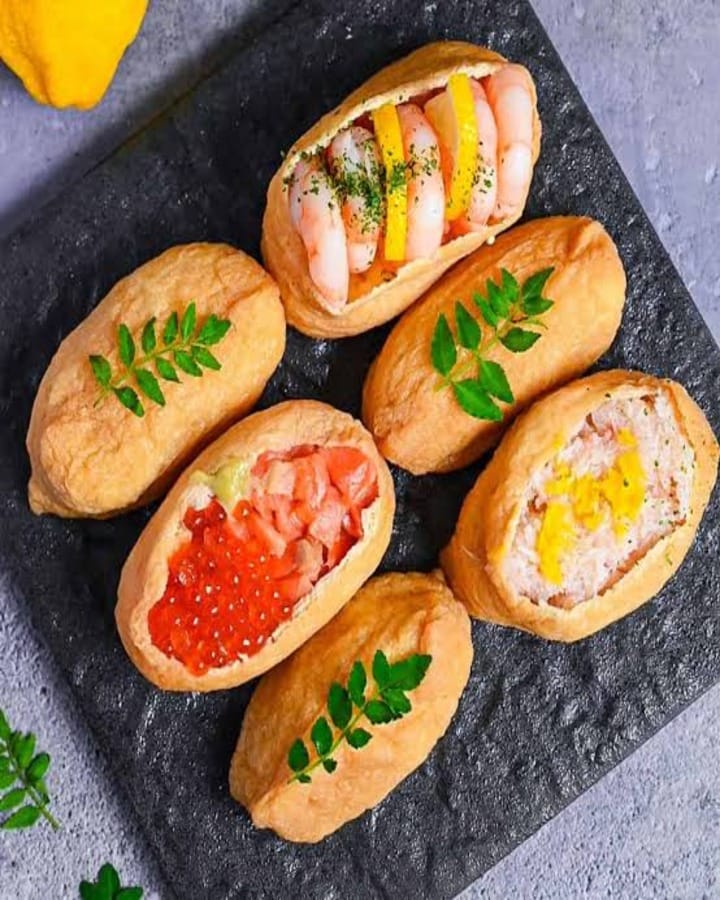

Image Credit -Hema
When you think of sushi, your mind likely leaps to slices of raw fish atop vinegared rice. However, Inarizushi offers a completely different, soul-warming experience. Often referred to as “brown bag sushi” or “sushi pockets,” this humble dish consists of succulent, fried tofu pouches (aburaage) simmered in a sweet and savory dashi broth, then stuffed with seasoned sushi rice. Named after the Shinto god Inari, whose fox messengers are said to have a penchant for fried tofu, this dish is a staple of Japanese picnics, bento boxes, and family gatherings. Its unique balance of sweetness, acidity, and chewiness makes it an accessible favorite for sushi beginners and aficionados alike.
The Irresistible Charm of Inarizushi: A Guide to Japan’s Favorite Pocket-Sized Snack
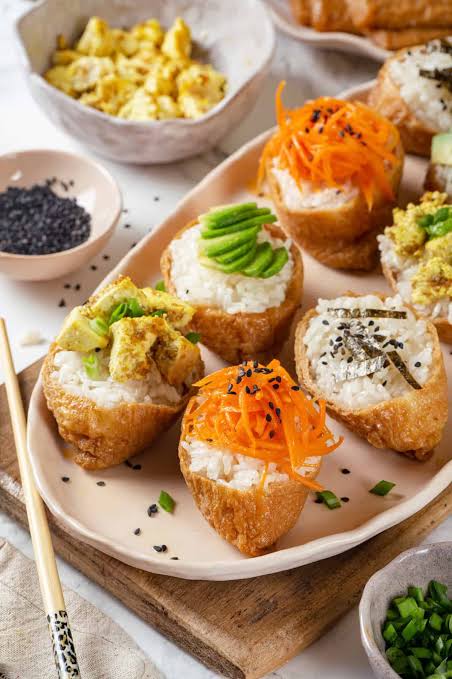
Unlike Nigiri or Maki, Inarizushi is defined by its outer layer: Aburaage. These are thin slices of tofu that have been deep-fried until they become airy and pocket-like.
The magic happens during the simmering process. The tofu skins soak up a mixture of soy sauce, sugar, and dashi, transforming into juicy, flavorful envelopes. While the most common version features plain vinegared rice, many regional variations include “gomoku” fillings—rice mixed with finely chopped carrots, shiitake mushrooms, or sesame seeds for added texture and earthiness.
How to Enjoy
Inarizushi is remarkably versatile. Because it is self-contained and holds up well at room temperature, it is the ultimate “on-the-go” food.
- As a Snack: Its sweetness makes it a satisfying midday treat.
- In a Bento: It pairs perfectly with tamagoyaki (rolled omelet) and pickled ginger.
- Vegetarian-Friendly: Naturally meat-free, it is a go-to option for those seeking plant-based Japanese cuisine.
Making at Home: Quick Tips
- Prep the Pouches: If using canned aburaage, squeeze out the excess liquid gently so the rice doesn’t become soggy.
- Season the Rice: Use high-quality rice vinegar, sugar, and salt to ensure the rice can stand up to the bold flavor of the tofu.
- The Filling Technique: Wet your hands to prevent sticking. Form a small oval of rice and tuck it into the corners of the pouch first to ensure a plump, even shape.
Whether you are looking for a quick lunch or a unique addition to your next dinner party, Inarizushi is a delightful departure from the standard sushi roll. Its deep roots in Japanese folklore and its comforting, sweet-savory profile make it a dish that feels both ancient and timeless. Its simplicity is its greatest strength, proving that you don’t need complex ingredients to create a flavor profile that is deeply satisfying. Have you ever tried making these tofu pockets at home, or do you prefer the ones from your local sushi spot? Let us know in the comments below!
Frequently Asked Questions
Is Inarizushi considered vegetarian or vegan?
Yes, traditionally Inarizushi is vegetarian. The pouches are made of tofu and the filling is rice. However, always check if the dashi used to simmer the tofu contains bonito (fish) flakes. If it is made with kombu (seaweed) dashi, it is fully vegan.
What is the difference between Inarizushi and regular sushi?
The main difference is the wrapper and the flavor profile. Regular sushi usually uses Nori (seaweed) and focuses on fresh, raw toppings. Inarizushi uses fried tofu skins and has a much sweeter, cooked flavor profile, making it a popular choice for children and those who don’t enjoy raw fish.
How long does Inarizushi stay fresh?
Because the tofu pouches are cooked in a sugar-heavy glaze, they act as a natural preservative. Inarizushi can stay fresh in the refrigerator for about 2–3 days. For the best texture, let it sit at room temperature for 15 minutes before eating so the rice softens.